What Do American Black Bears Eat?

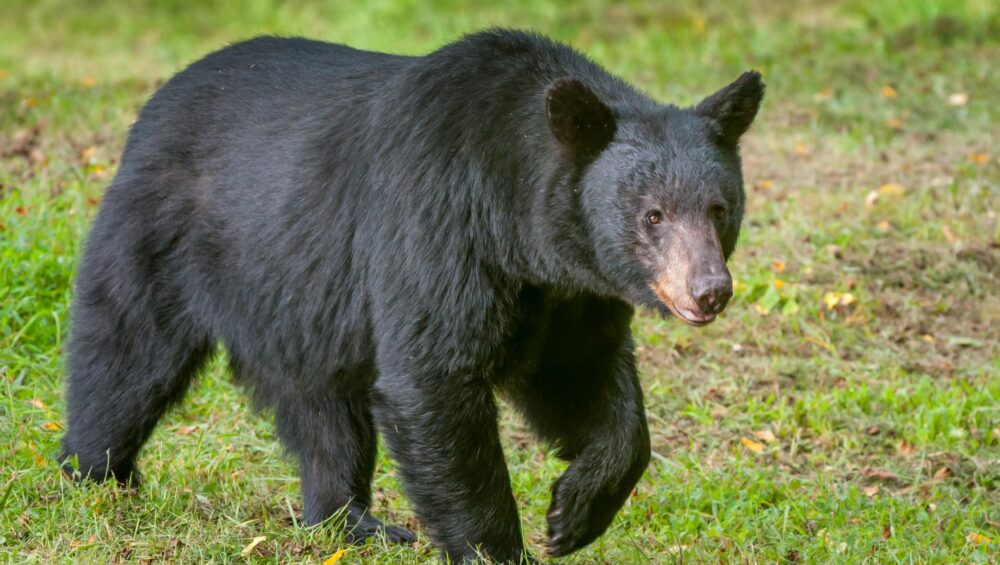
The American Black Bear is the iconic inhabitant of the Great Smoky Mountains. No visit is complete without picking-up a bear souvenir and trying to site one while driving a scenic byway. But have you ever wondered what the bears are doing while you are looking for them? Most likely, if they are not sleeping, they are busy foraging for food. This is particularly true for female bears who are nursing their cubs.
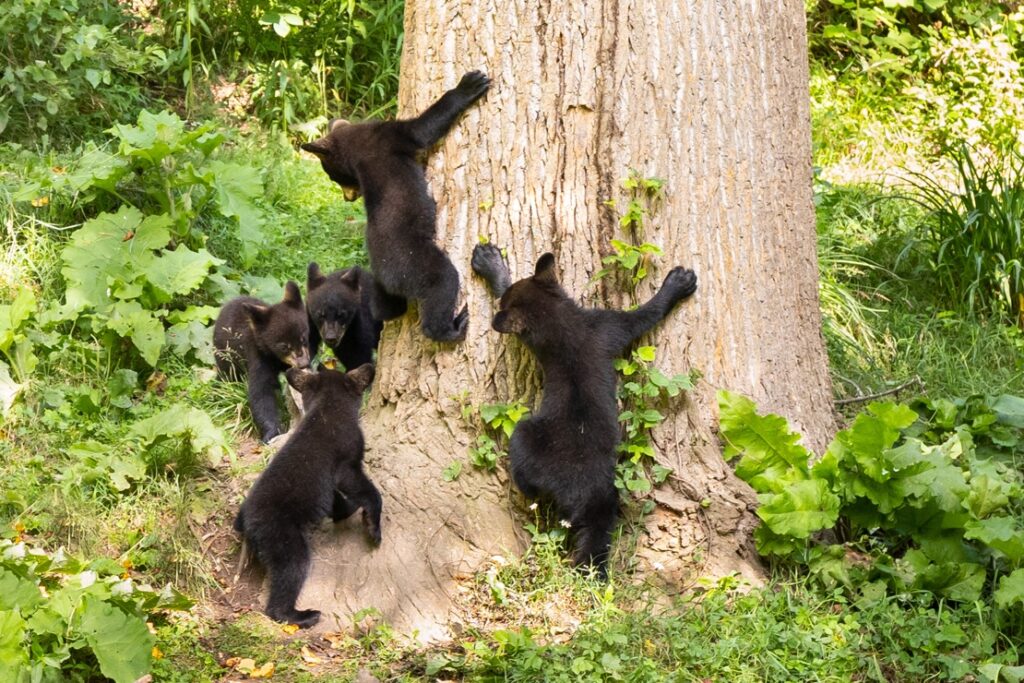
Five bear cubs playing


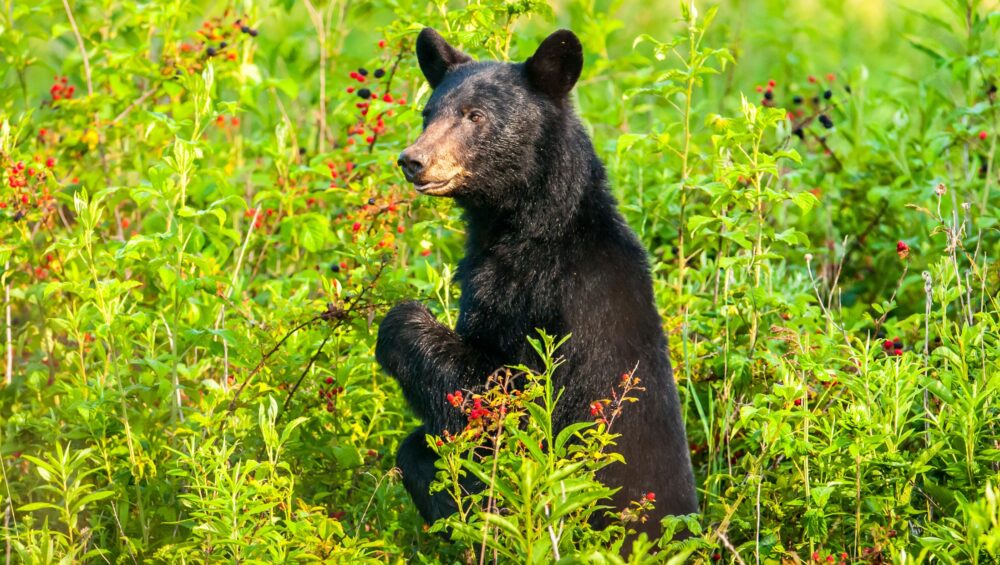
So, what are they eating out there in the woods and fields of the Smokies? Black bears are omnivorous, meaning that they are opportunistic feeders who will eat a variety of things, including vegetation and meat. In the Spring when food is scarce, bears may eat grasses, inner tree bark, insects, and insect larvae.  They will tear apart rotting logs and overturn rocks looking for invertebrates. Bears will also feed on carrion that they come across. They will follow the food sources that become available throughout the year such as blackberries, cherries, acorns, and walnuts. 

Black Bears are the smallest North American bear, but they have the keenest noses in the park. Bears rely on their sense of smell for finding food.  It is thought that they can smell a food source over two miles away! Because of this it is always important to follow proper food storage protocols when hiking and camping to help minimize human and bear interactions.
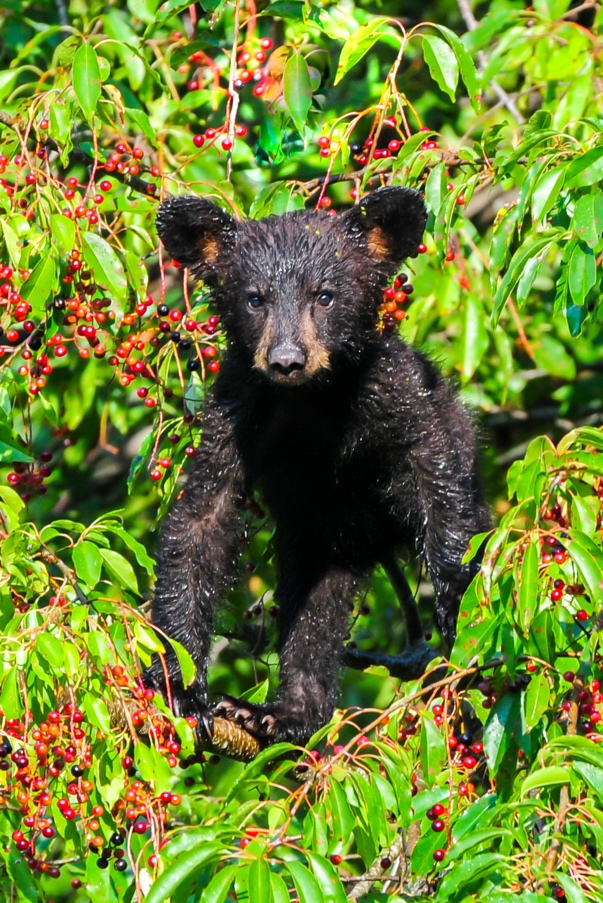
Bear cub in cherry tree


While you enjoy your visit to the Great Smoky Mountains, don’t forget to respect the wildlife and the wilderness around you. Bears and the other inhabitants of the area are wild animals and approaching them is dangerous for both humans and the animals. Photographs and videos in this article were taken with appropriate telephoto/zoom lenses while maintaining a safe distance from the subject.

Video of black bear digging up a yellow jacket nest to eat the larvae.

References:

https://www.nps.gov/articles/000/american-black-bear.htm 

http://www.bearconservation.org.uk/eastern-black-bear/

https://www.nwf.org/Educational-Resources/Wildlife-Guide/Mammals/black-bear

https://www.chesapeakebay.net/discover/field-guide/entry/american-black-bear
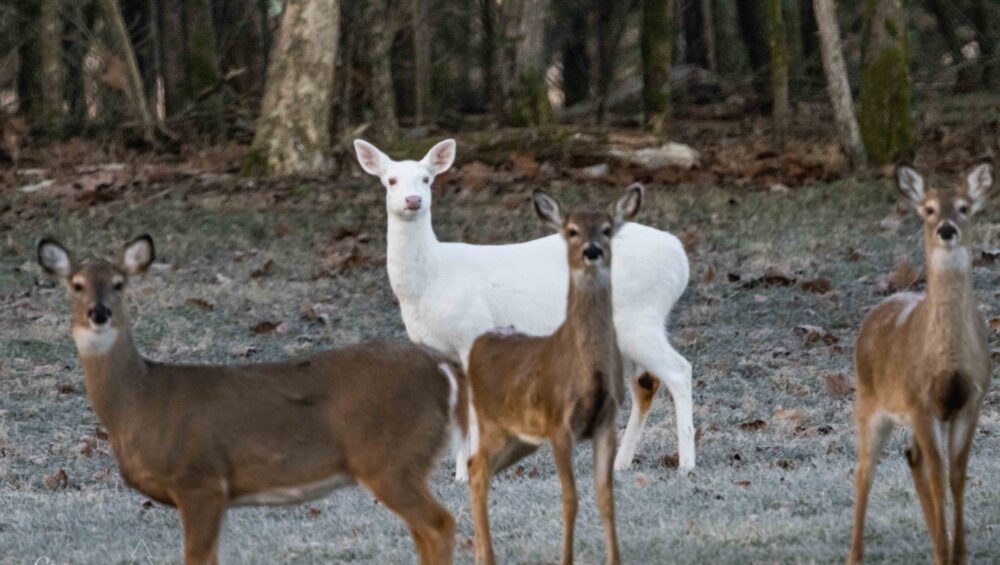
Albino and Leucistic Wildlife

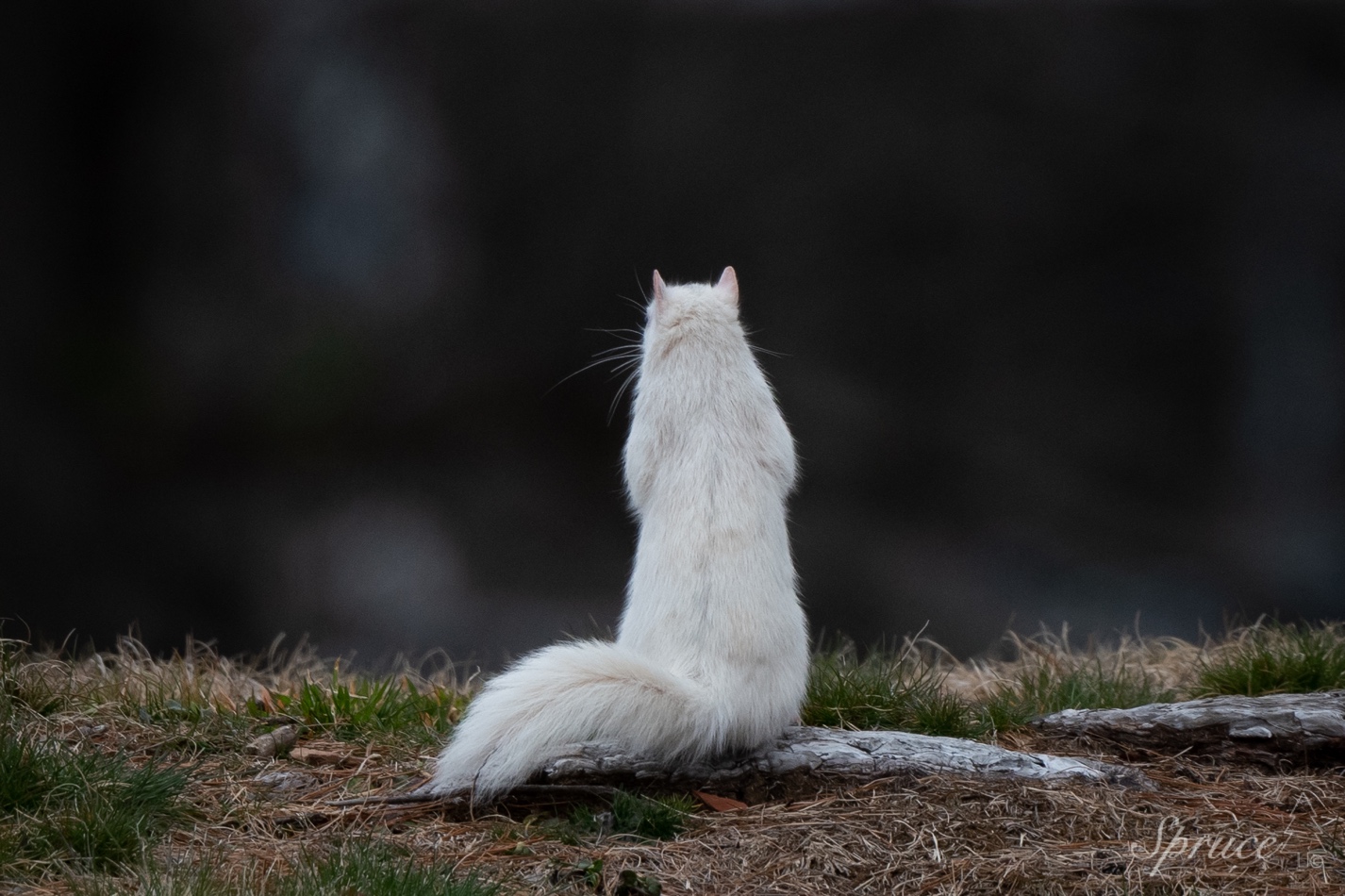
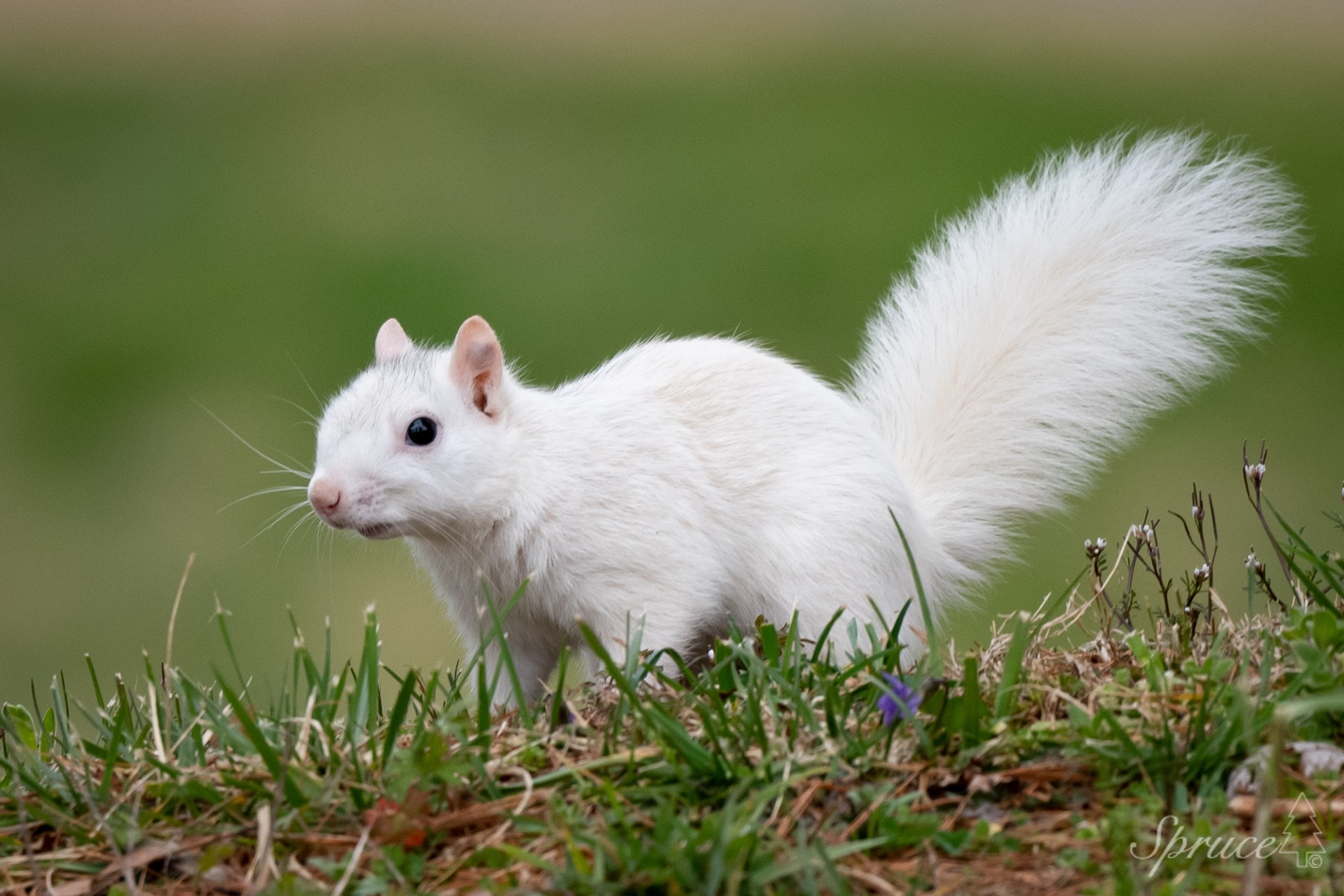
If you are lucky, you may one day see an animal or bird lacking pigment in fur or feathers. A loss of pigmentation caused by a genetic mutation that interferes with the production of melanin is called albinism. Melanin produced in an animal’s body is the main pigment that determines skin, fur, and eye color. A true albino animal will typically have pink eyes. Albino animals are rare in the wild. They do not survive very long due to their conspicuous color and poor eyesight. Other forms of partial pigmentation loss such as leucism occurs more frequently.

Leucism does not completely eliminate pigment and can result in a variety of patterns. Leucistic animals will have some pigment in their fur, eyes, feathers, etc.  A leucistic deer can vary greatly. In some instances, they may have some white splotches. In other cases, they may be half brown and half white or nearly all white. Piebald is a term used for mixed brown and white animals. Leucism in deer is a recessive genetic trait found in about 1% of the population. 

Leucistic Squirrel

White leucistic squirrels are a tourist attraction in several U.S. cities. As with other animals, fur color in squirrels varies widely, and true albinos are rare. Even though most white squirrels are leucistic, the town of Olney, Illinois has a colony of albino squirrels. Approximately 12% of Olney’s squirrels are true albinos.

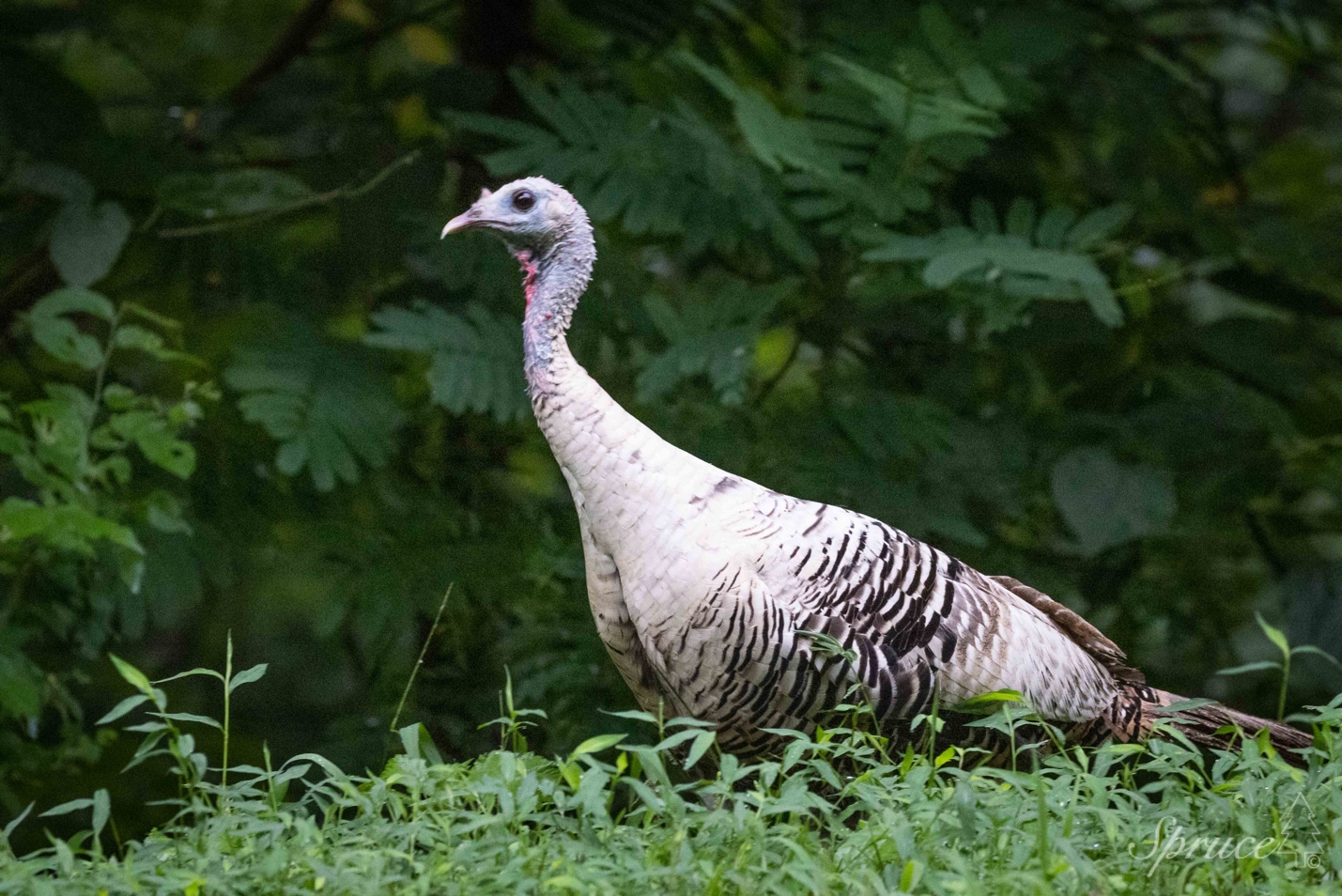
Leucistic and albino turkeys are also observed in the wild.  There are several different color phases of turkey, such as the smoke-phase, which is much more common than leucistic or albino. The smoke-phase has a significant lack of brown pigments, and appears more gray or smoky looking. The majority (approximately 95%) of smoke-phase turkeys are hens. 

Smoke-Phase Turkey Hen

Regardless of the cause of a rare color variation in nature, it is always an exhilarating experience when one has the opportunity to photograph it. 

References:

https://www.nationalgeographic.com/animals/article/albino-animals

https://www.birdsandblooms.com/birding/birding-basics/albinism-in-birds/

https://blog.nature.org/science/2016/02/03/white-deer-understanding-a-common-animal-of-uncommon-color/

https://www.wideopenspaces.com/white-wild-turkey/

https://blog.nature.org/science/2021/10/11/whats-up-with-white-squirrels-and-black-squirrels/

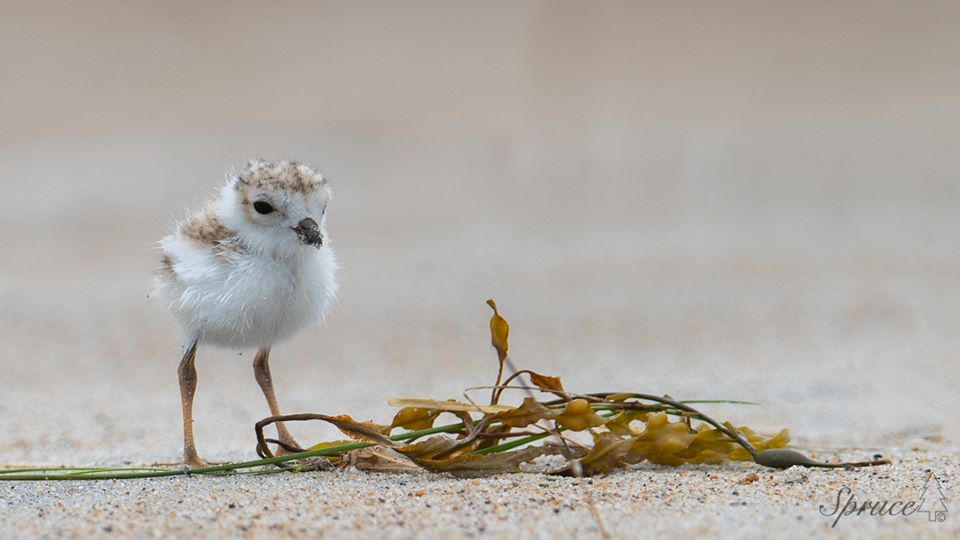
Piping Plover

The Piping Plover population of the USA has been in trouble for a long time now. Thankfully conservation actions were started to protect the beaches along the Atlantic coast where they breed. There has been a slight boost in the population (numbers now range in the 5-10 thousand) in recent years as a result of these actions of conservation. Their breeding range is from south Newfoundland to northern South Carolina along the Atlantic coastline. There is also a small population in the midwest, south and west of the great lakes. 

The Piping Plover gets its name from the bell like whistles used in its call and is often heard before it is seen. The adult is about 7 inches long and has a bright yellow beak as well as yellow legs. Despite that bright coloration, they blend in remarkably well to their beach habitat. They can stand still for long periods of time and then suddenly run for a burst 20-30 feet before stopping motionless again. They feed on small insects and vertebrae found on the beaches. Piping Plover are often found breeding on the same beaches as breeding Least Terns. I will be posting the terns in future posts.

They winter in the Caribbean and US Gulf shoreline from September-March and breed April-August along the Atlantic shoreline. They can have several broods, and the 1st one in May usually produces 3-4 chicks with subsequent broods producing less. The chicks have to forage for their own food, and they do so as early as 1 hour after birth. This chick included in the post is only days old and about 2″ long. I included the seaweed in the image to show the details of its small size at such a tender young age. The images were taken on the last day of June. I witnessed a few 3 chick families but mostly 2 chick families at this location.

Black Bears

Smoky Mountain Black Bears males average around 250 pounds while females are just over 100 pounds. This is an extreme difference and can sometimes be used to tell the sex of a mature bear. Some other physical appearance differences are the shape and size of the head and its parts. Adult females tend to show a more elongated face (more dog like) and longer taller ears. An adult male’s head and face has more round like features, and their ears have a more squatty appearance. Both males and females can run up to 25-30mph if they have to. They are extremely strong and able to lift 300 lbs. with a single lift of a front forearm. What is more amazing is the dexterity they have along with that strength. They are able to use their paws and claws to do the smallest and most difficult precise movements when foraging and feeding. They hear and see better than humans, but their most amazing sense is smell. They can smell 7x better than a domestic dog. Females can breed as early as 3 years old, and American Black Bears live on average to be 18 years old in the wild.

Red Foxes

Today’s post is on the Red Fox. Hopefully between description and photos when you are done reading my blog you will have a better understanding of the differences between the Red Fox and Gray Fox which I blogged on yesterday. The two foxes are distant cousins to each other as we discussed already. Both are common to the US with the Gray Fox being the dominant fox West of the Mississippi and the Red Fox the dominant fox East of the Mississippi.

The Red Fox is only slightly larger than the Gray Fox. Its overall color is an orange brown and the tip of its tail is white. Different to other foxes it has black legs called stockings.

It is also different than the Gray Fox because of where it lives. The Red Fox has only a small presence in the actual territory of the Great Smoky Mountain National Park. Fearful of another canine, the Coyote, it chooses to rather live in outlying areas buffering the heavily wooded national park. It can be found in towns and even cities which have greenbelt areas and county parks. It also enjoys living around golf courses and country clubs. Those locations are surrounded by wooded areas in which they hunt and the grassy fairways are like their highways to get from one hunting ground to another.

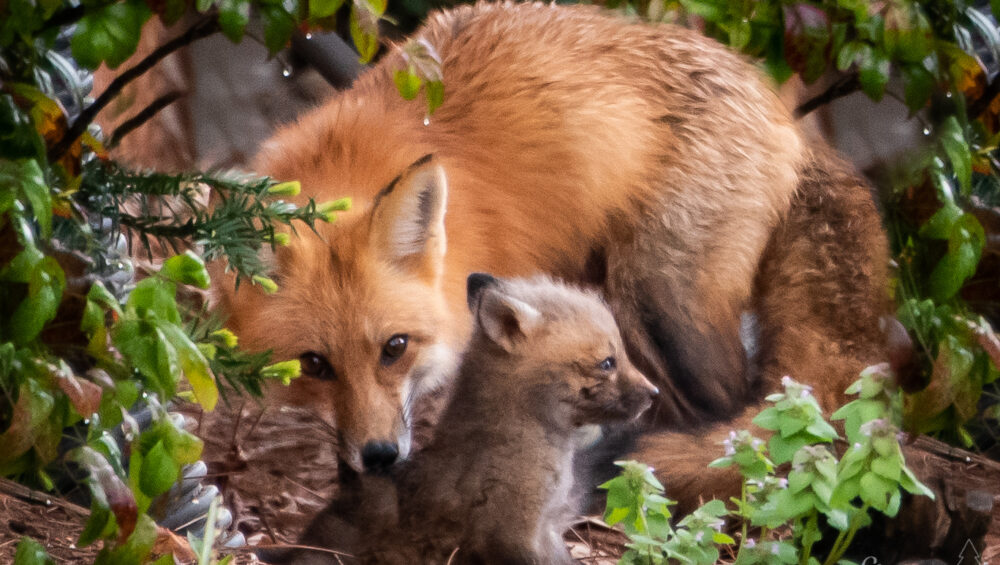
Because they do live in close proximity to humans, Red Foxes may be seen when they are moving from one area to another. They are seen even more in late winter and early Spring when males are searching for females. Females and kits are seen frequently in late spring. One of the reasons for this is that female Red Fox have to hunt and provide for their kits. They also have a tendency to move their kits from one den site to another. Sometimes the first spot is very small or very close to human activity. As the kits grow more space and privacy may be required, so she moves them during the night time hours. If this occurs she will move one kit at a time until the whole family is secure in the new location. Red Fox usually have 1-7 kits sometimes called cubs. It is common for a female to have a litter of 4 or 5.